One-to-one learning support
Flexible tuition for neurodivergent students
A calm, home-like approach that makes room for movement, breaks, honest questions and the way each learner thinks.
- Movement welcome
- Breaks without fuss
- Questions encouraged
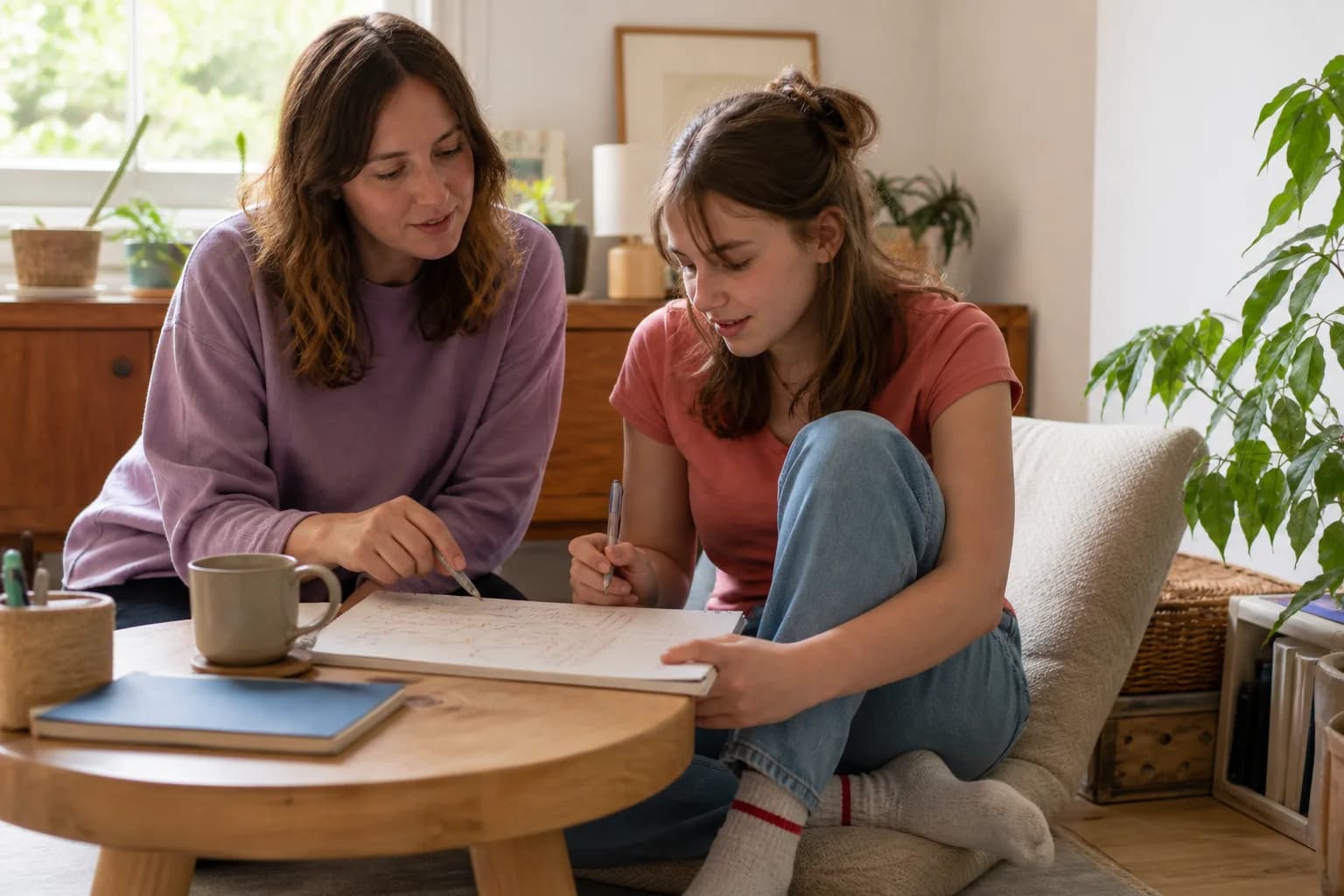

Comfort is part of learning
Make space for the learner, not just the lesson
Discomfort can make it much harder to focus. A relaxed, home-like setting can reduce avoidable barriers by making room for a comfortable position, movement, pauses, food, drink or a fidget when that helps.
This is not about lowering expectations. It is about creating conditions in which the learner has a fairer chance to engage.
Freedom to move
A learner can choose a comfortable position, stand, stretch or move when that makes it easier to stay engaged.
Breaks without fuss
A pause, drink, snack or fidget can be a useful reset rather than a disruption to the session.
Work it through together
Conversation, body doubling and social problem-solving can make learning active, shared and less isolating.
Interests create connection
Existing interests and understanding can become practical routes into unfamiliar ideas.
A flexible rhythm
A session can move at the learner’s pace
There is a clear purpose, but no demand to follow one rigid route. We can talk, work, pause and reframe as the learner needs.

- 1
Arrive as you are
Comfortable clothes, a preferred seat, a drink and time to settle can all be part of creating the right conditions to learn.
- 2
Work side by side
Ideas are talked through and problems are worked on together, with the approach shaped around the learner in front of us.
- 3
Reset when needed
Movement, a fidget, a short pause or a moment with a household pet can help when learning starts to feel overwhelming.
- 4
Try another route
If an explanation is not landing, we can slow down, reframe it and connect the work to something already familiar.
Trust and student voice
Honesty makes room for real understanding
A learner should feel safe enough to say “I don’t get it”, ask for help or suggest a break. That honesty lets us change pace, try another explanation and keep the relationship respectful.
You never need to nod or agree when you do not understand.
Listened to, not judged
Questions, uncertainty and requests for help are useful information.
Working alongside
Sessions can be chatty and active rather than long stretches of silent sitting.
Common questions
A clearer picture before you get in touch
Every learner is different. These answers explain the approach without assuming one profile fits everyone.
01What makes this tuition neurodivergent-friendly?
The approach starts with the learner rather than a fixed idea of how a student should sit, concentrate or communicate. Sessions make room for movement, breaks, conversation, comfortable clothing and different ways of explaining an idea.
02Can a student move, eat, drink or use a fidget?
Yes. The aim is a relaxed, home-like environment where practical needs can be met without embarrassment. If moving, taking a drink or using a fidget helps a learner reset, it can be part of the session.
03What happens when something does not make sense?
Students are encouraged to say so honestly. There is no need to nod along. We can pause, talk the problem through, try another explanation or approach it through an interest that already feels familiar.
04How is the learning personalised?
Experience supporting learners with special educational needs informs a flexible approach. The conversation, pace, examples and structure can all be adapted as we get to know what helps the individual learner engage.
05How do we start?
Begin with an informal conversation. You can share what helps the learner feel comfortable, what tends to become overwhelming and what they enjoy, then explore whether the approach feels like a good fit.

Prefer learning through a project?
Explore Build My World
A parent-supported home-learning pilot that turns the geography of a meaningful real place into a world to explore and build.
Discover Build My WorldStart with the learner